

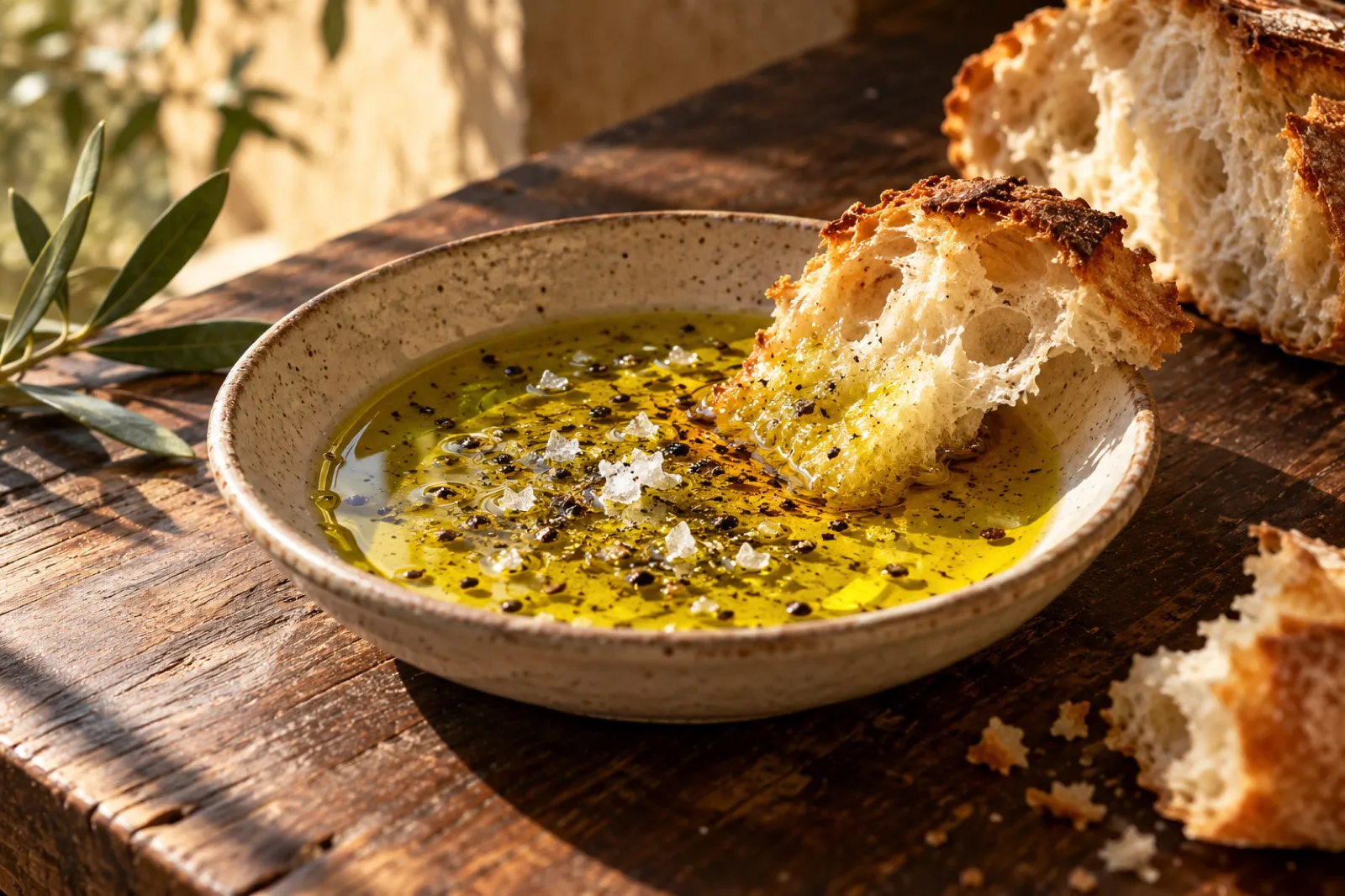
Bread and olive oil is the first thing on many tables and the last thing anyone thinks about. It deserves a little more care, because when it is good, people remember it. The good news is that doing it properly takes about five minutes and no special skill.
Start by tasting the oil
This dip is almost entirely oil, so the oil decides how it tastes. Pour a teaspoon into a spoon or a small glass and taste it on its own. Breathe in first. Then take a small sip, pull a little air in over it, and swallow.
You are looking for freshness: a green, grassy or fruity smell, and a taste that feels clean. Some good oils have a bitter edge or a peppery catch at the back of the throat. That is a normal part of extra virgin olive oil. What you do not want is anything flat, greasy, musty, or reminiscent of old nuts or crayons. If your oil tastes like that, it has gone past its best, and no amount of garlic will rescue the dip.
The plain version
Serves 2 to 4 as a starter.
- 4 tbsp (60 ml) extra virgin olive oil
- Half a tsp flaky sea salt
- A few turns of black pepper
- Half a loaf of good bread
- Warm the bread in a 180°C oven for 5 to 8 minutes, until the crust crackles when you press it.
- Pour the oil onto a wide, shallow plate rather than a deep bowl, so every piece of bread gets a good coat.
- Scatter the salt and pepper over the surface of the oil.
- Tear the bread by hand rather than slicing it. Torn edges catch more oil.
Why the details matter
The plate. A deep bowl means the first few pieces of bread get everything and the rest scrape the sides. A wide plate keeps the oil shallow and easy to reach.
The salt. Salt does not dissolve in oil. If you stir it in ahead of time, it sinks to the bottom and you get one very salty mouthful at the end. Scattered on top, flaky salt stays crisp and spreads across every dip.
The bread. You want an open crumb that soaks up oil and a crust with some chew. Sourdough, ciabatta and focaccia all work. Soft sliced bread turns soggy. Warming the bread matters more than most people think: it brings out the smell of the oil and the bread at the same time.
Four ways to dress it up
Each of these goes on top of the plain version. Pick one, not all four. The oil should still be the main event.
- Garlic: grate 1 small clove very finely into the oil and leave it for 5 minutes before serving.
- Herbs: half a tsp dried oregano, rubbed between your fingers as you scatter it, or a few chopped rosemary needles.
- Heat: a pinch of chilli flakes, sprinkled over one side of the plate so people can choose.
- Citrus: the finely grated zest of a quarter of a lemon, added just before serving.
What about balsamic vinegar?
Plenty of restaurants serve oil with a pool of balsamic in the middle. It is a matter of taste, not a rule. A few drops can be lovely. The trouble is that sweet, syrupy balsamic tends to drown out the oil entirely, and then you are mostly tasting vinegar. If you want to try it, use a small amount and add it to one side of the plate, so the oil still has room to be tasted on its own.
Make it fresh
This is a dip to make at the table or just before. Pour only what you will eat. If you have added fresh garlic, do not keep the leftover oil at room temperature: use it for cooking that day or throw it away. Plain oil left on the plate can go into a pan for frying eggs the next morning.
Keep the bottle itself somewhere cool and out of the light, with the cap closed between uses. Olive oil is at its best when it is used, not saved.
A few things to serve alongside
- A bowl of olives
- Sliced cucumber or radishes with salt
- A wedge of white cheese, such as feta
- Thinly sliced cured meat
None of these are required. Bread and oil on their own is a complete thing.
Our extra virgin olive oil comes from Dukat, a village in Vlorë county, Albania, between the mountains and the sea. If you want a bottle that lives on the table for exactly this, The Bottle is a good place to start.