

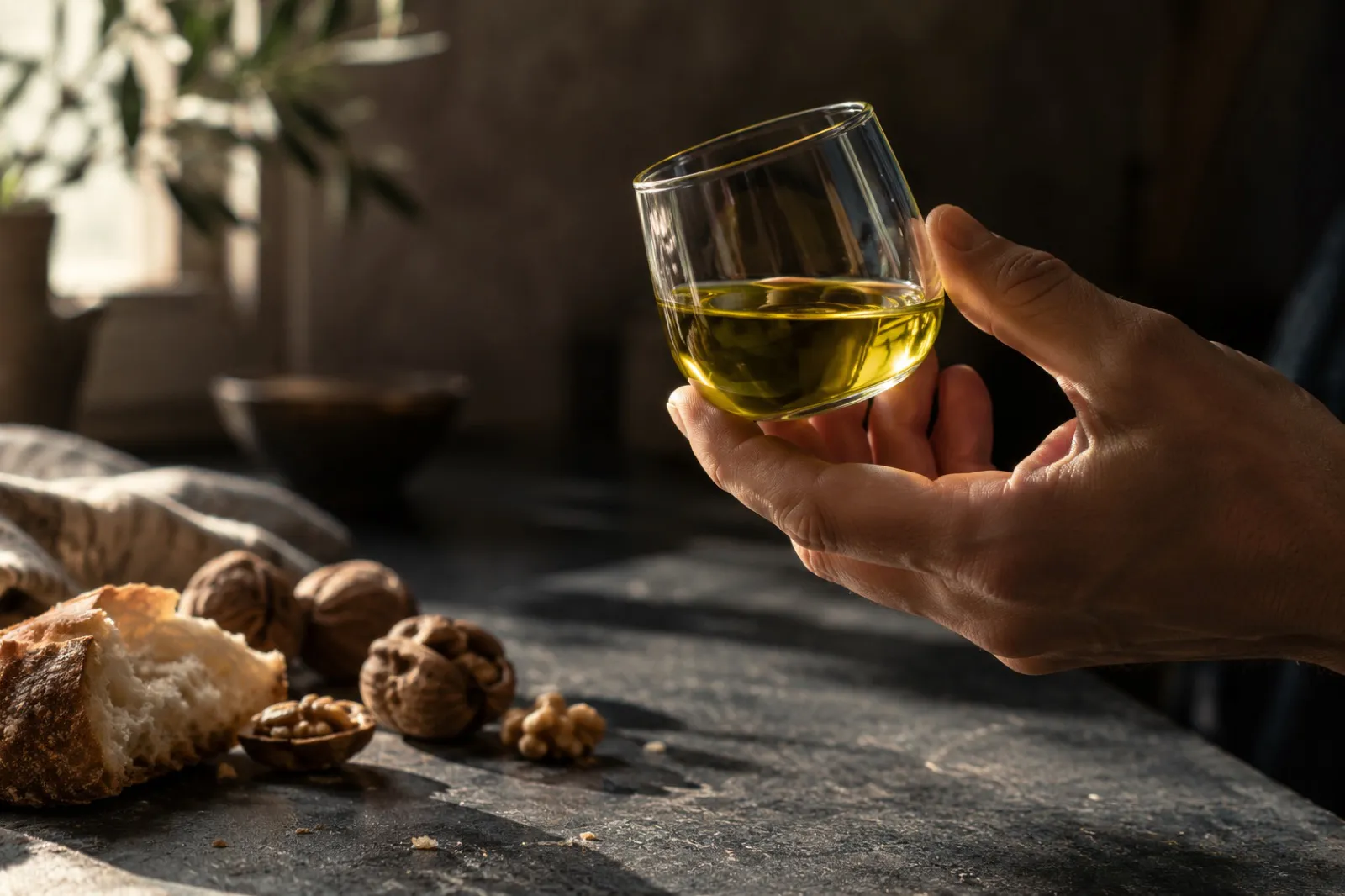
Plenty of people have never tasted olive oil that has gone off. Or rather, they have, many times, and assumed that is just what olive oil tastes like.
That is the problem with stale oil. It does not announce itself with mould or a bad colour. It just quietly tastes worse. The good news is that the main faults have very distinct smells, and once you know them you will spot them for good.
How to check
- Pour a spoonful into a small glass.
- Cup it in one hand and cover it with the other for a minute or two to warm it.
- Uncover and take a few short sniffs.
- If you are not sure, take a small sip and draw air in through your teeth.
Good olive oil smells of something fresh: cut grass, green leaves, apple, tomato, almond, ripe fruit. If what you get instead matches one of the descriptions below, you have found a fault.
Rancid
What it smells like: crayons, putty, old walnuts, stale crisps, cheap cooking fat, the inside of an old biscuit tin. In the mouth it feels greasy and leaves a flat, waxy aftertaste.
What causes it: oxidation. Over time, oxygen reacts with the oil and breaks it down. Light and heat speed this up a lot. Every olive oil will turn rancid eventually; good storage just pushes that day further away.
How common it is: very. It is the fault you are most likely to meet at home, especially in a bottle that has been open for a long time, kept near the cooker, or sold in clear glass.
How to avoid it: buy oil with a recent harvest date, keep it in a dark, cool cupboard with the cap on, and use an opened bottle up steadily rather than letting it sit for months.
Fusty
What it smells like: sweaty, muddy, a bit like old brine or over-fermented olives. Some describe it as a farmyard or sweaty-sock smell.
What causes it: olives that were piled up and left too long before pressing, so they started to ferment. It can also develop in unfiltered oil when the sediment at the bottom of the bottle is left to sit for a long time.
How to avoid it: the original cause happens before the oil reaches you, so the fix is choosing a careful producer. At home, if your oil is unfiltered, use it up promptly and do not stir the sediment back in.
Musty
What it smells like: damp, mouldy, earthy, like a cellar, wet cardboard or old mushrooms.
What causes it: olives that went mouldy, usually because they were stored damp for days before pressing.
How to avoid it: like fusty, this happens at the mill, not in your kitchen. If an oil smells musty from the moment you open it, the fault was there all along.
Winey or vinegary
What it smells like: sour, sharp, like wine starting to turn, or vinegar. Sometimes a little like nail varnish.
What causes it: fermentation in the olives before pressing, producing the same kind of sour notes you get in wine that has gone off.
Other things you might notice
- Metallic: a tinny note, sometimes from oil left too long in contact with unsuitable metal.
- Heated or burnt: a cooked, scorched smell, from too much heat during production.
- Frozen or wet wood: a dry, woody note from olives damaged by frost on the tree.
- Nothing at all: not technically a fault, but a sign the oil is old and has lost its character.
What to do with oil that has gone off
Rancid or fusty oil will make your food taste of rancid or fusty oil, and cooking does not hide it. Do not waste good ingredients on it. Do not pour it down the sink either, since oil can clog drains. Seal it in a container and dispose of it with your general waste or at a local recycling point that accepts cooking oil.
Start fresh, stay fresh
Rancidity is the one fault you can largely control at home. The other three are mostly decided before the oil is bottled. That makes two things matter when you buy: knowing when the oil was made, and trusting how it was made.
Every Dukat bottle carries a harvest date and a batch code, so you can see exactly how old your oil is, and it comes from one place: Dukat, a village in Vlorë county, Albania, between the mountains and the sea. If your current bottle smells like crayons, a fresh one is here.