

Most olive oil in most kitchens lives in the same place: on the counter, right next to the hob, where it is easy to grab. It is the most convenient spot in the room and close to the worst one for the oil.
Olive oil is a fresh product. It does not go off like milk, but it does change from the day it is bottled, and where you keep it decides how fast. Three things speed that change up: light, heat and air. Find a spot that keeps all three away and the oil will taste the way it should for much longer.
The three things olive oil does not like
Light. Daylight and strong artificial light both break down olive oil over time. This is why so many producers bottle in dark glass or tins. A clear bottle on a sunny windowsill is about as hard as you can be on it.
Heat. Warmth speeds up the reactions that make oil taste flat and then stale. A bottle that sits by the cooker gets warmed every time you cook, cools down, then gets warmed again. It adds up.
Air. Once the bottle is open, oxygen gets in. Some is unavoidable, but a loose cap or an open pourer left uncovered lets in far more than it needs to.
Where to keep it
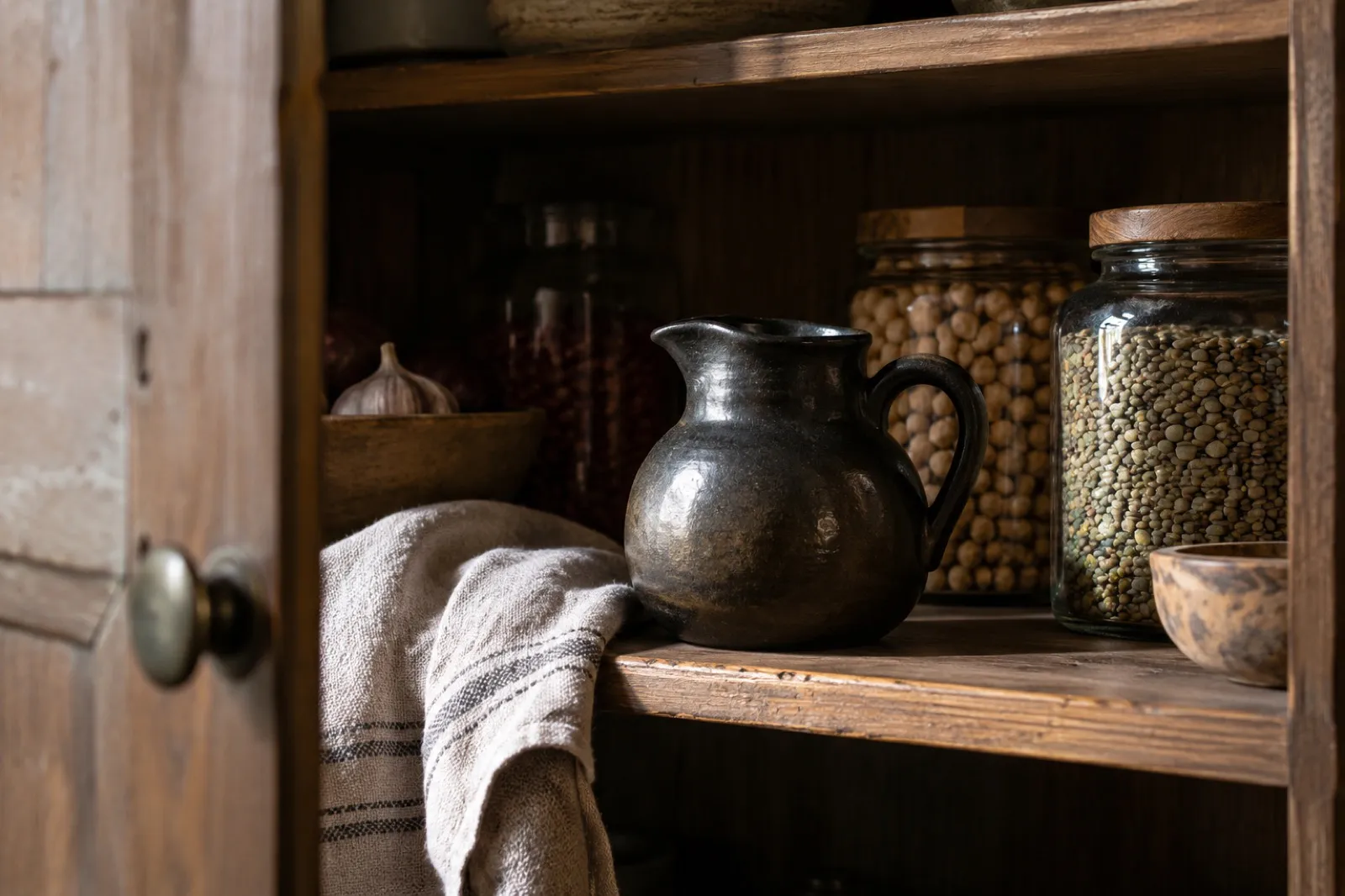
The best spot in most kitchens is a closed cupboard or pantry shelf that does not share a wall with the oven, hob or dishwasher. You want it:
- Dark. A cupboard with a door beats an open shelf.
- Cool. Normal room temperature is fine. Steady is better than swinging between warm and cold.
- Close enough to use. A bottle you cannot reach is a bottle you do not open. Pick the nearest cupboard that ticks the first two boxes.
Keep the cap on between uses, and stand the bottle upright so oil is not sitting against the closure.
Where not to keep it
- Next to the hob or oven. The most common spot and the warmest. Even if the bottle never feels hot, it is being heated over and over.
- On a windowsill. Light and heat together, often for hours a day.
- On top of the fridge. The back of a fridge gives off warmth, and that warmth rises.
- Above the dishwasher or kettle. Steam and heat, every day.
- On an open rack under spotlights. It looks good. The oil does not enjoy it.
What about the fridge?
You do not need to refrigerate olive oil, and for everyday use it is more trouble than it is worth. In the cold, olive oil turns cloudy and can thicken or partly set. That is normal and it clears again once the oil is back at room temperature, but it means you cannot pour it straight onto your food.
There is one case where the fridge can make sense: if you live somewhere very hot with no cool cupboard at all. Even then, keep a small amount out for daily use and the rest in the cold, rather than moving one bottle in and out.
The counter compromise
Plenty of people want oil within arm’s reach while they cook, and that is fair. If you cook every day, try this:
- Keep the main bottle in a dark cupboard.
- Fill a small, opaque cruet or pourer with what you will use in the next week or so.
- Keep that small one on the counter, away from the hob, and top it up from the cupboard bottle.
Clean and dry the small container fully before refilling it now and then, so old oil is not mixing with fresh.
How to tell if the spot is working
Your nose will tell you. Fresh olive oil smells green, fruity or grassy. Oil that has been kept somewhere warm and bright starts to smell flat, then waxy, a bit like crayons or old nuts. If a bottle you opened recently already smells like that, look at where it has been living.
It also helps to know how old the oil was when it reached you. Every Dukat bottle carries a harvest date and a batch code, so you can check exactly what you are pouring. If you want to see what yours says, you can look up your batch here.
The short version
Dark, cool, closed. A cupboard away from the cooker, cap on, bottle upright. Skip the windowsill and the shelf above the hob. Do that and the oil you open in a few weeks will taste much like the oil you opened today.