

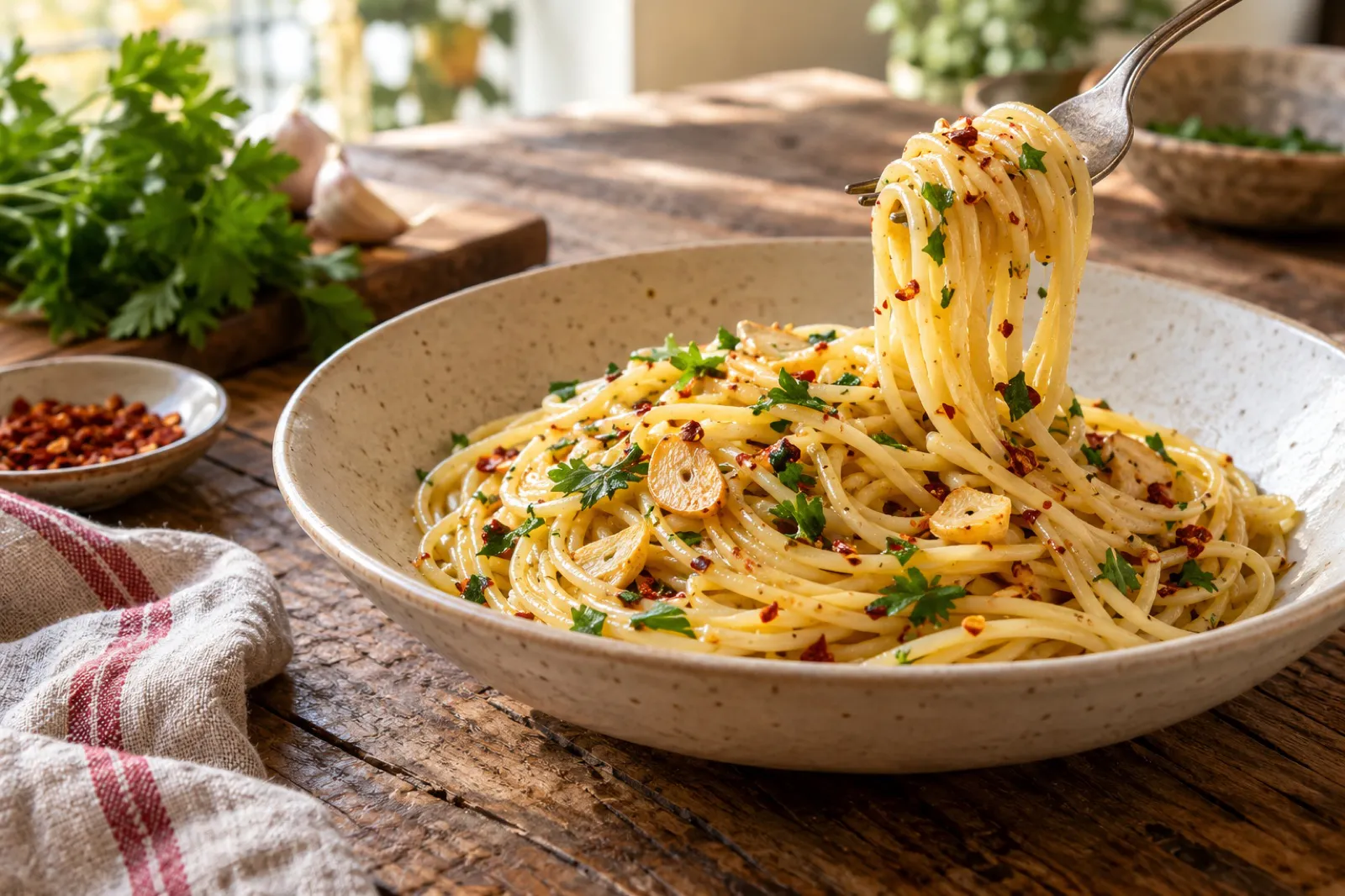
Aglio e olio means garlic and oil. It is one of the simplest pasta dishes there is, and one of the most satisfying: spaghetti, garlic, dried chilli, parsley and a generous amount of olive oil, brought together with a splash of starchy pasta water. Most kitchens have everything it needs on any given night.
Because the oil is the sauce, this is a dish where the bottle you use really shows. It is also a dish where technique matters more than ingredients. Get the garlic and the pasta water right and it is excellent.
Spaghetti aglio e olio
Serves 2.
- 200 g spaghetti
- 6 tbsp (90 ml) extra virgin olive oil
- 4 garlic cloves, thinly sliced
- Half a tsp dried chilli flakes, or to taste
- A small handful of flat-leaf parsley, finely chopped
- Salt
- Bring a large pan of water to the boil and salt it well. Add the spaghetti and cook it for 1 minute less than the packet says.
- While the pasta cooks, put 5 tbsp of the oil and the sliced garlic into a large, cold frying pan. Set it over medium-low heat.
- Let the garlic cook gently, stirring now and then, until it is pale gold, about 3 to 4 minutes. Add the chilli flakes and take the pan off the heat.
- Before draining the pasta, scoop out a mugful of the cooking water.
- Drain the spaghetti and tip it into the frying pan. Return the pan to medium heat and add about 100 ml of the pasta water.
- Toss and stir hard for 1 to 2 minutes. The water and oil will come together into a glossy sauce that clings to the pasta. Add more water if it looks dry.
- Stir in the parsley, check for salt, and serve with the last tablespoon of oil poured over the top.
The three things that matter
Start the garlic in cold oil. Garlic dropped into hot oil browns at the edges before the middle softens, and browned garlic tastes bitter. Starting it cold and heating it gently gives sweet, soft, evenly golden slices. Take it off the heat as soon as it turns pale gold, because it keeps cooking in the hot oil.
Use the pasta water. The water the pasta cooked in is full of starch. When you toss it with oil, the starch helps the two mix into a light, creamy sauce instead of separate puddles. Without it, you get oily spaghetti. With it, you get a sauce.
Toss with energy. The sauce forms through movement. Use tongs, toss and stir for a full minute or two, and keep adding splashes of water until the pasta looks glossy rather than wet or greasy.
Variation 1: lemon and toasted breadcrumbs
Adds crunch and brightness. Good for anyone who misses cheese, as aglio e olio is usually served without it.
- 40 g coarse breadcrumbs
- 1 extra tbsp olive oil
- Zest and juice of half a lemon
- Before you start the garlic, fry the breadcrumbs in the extra tablespoon of oil over medium heat, stirring, until golden and crisp. Tip them onto a plate with a pinch of salt.
- Make the pasta as above. Stir in the lemon zest and juice with the parsley.
- Scatter the breadcrumbs over each bowl just before serving.
Variation 2: anchovy and capers
Deeper and saltier. The anchovies melt into the oil and you will not find a fishy piece anywhere.
- 4 anchovy fillets in oil
- 1 tbsp capers, drained
- Add the anchovies to the cold oil with the garlic. As the oil warms, press them with a wooden spoon until they dissolve.
- Add the capers with the chilli.
- Finish as above. Taste before adding any salt, as anchovies and capers are both salty.
Variation 3: cherry tomatoes
A little sweetness and colour, and a sauce that feels more substantial.
- 200 g cherry tomatoes, halved
- A few basil leaves, torn
- Once the garlic is pale gold, add the tomatoes and the chilli. Turn the heat up to medium.
- Cook for 3 to 4 minutes, until the tomatoes soften and begin to release their juice.
- Add the pasta and pasta water and finish as above, using basil in place of parsley.
A few notes
- Spaghetti is the usual choice. Linguine and spaghettini also work.
- Slice the garlic rather than crushing it. Crushed garlic burns quickly.
- Use a pan large enough to toss the pasta in. A crowded pan makes it hard to build the sauce.
- Serve straight away. This sauce is at its best in the first few minutes.
A dish that uses six tablespoons of oil for two people goes through a bottle. Our extra virgin olive oil comes from Dukat, in Albania’s Vlorë county, in half-litre bottles. If pasta night is a weekly thing, a subscription keeps one in the cupboard.