

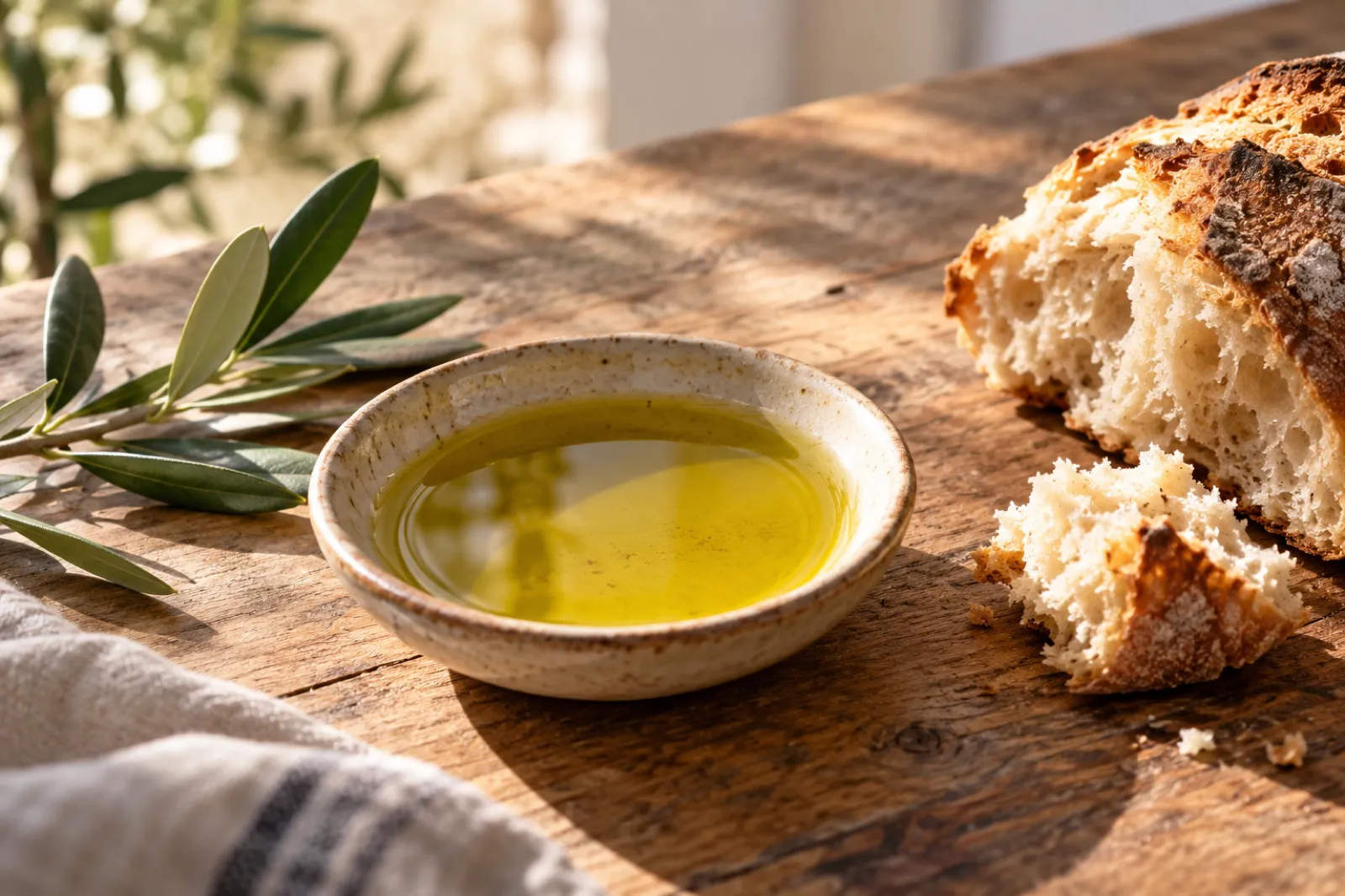
The short answer: olive oil does not become unsafe to cook with the moment you open it, but it does start to lose what makes it worth buying. The grassy smell, the fruit, the bitterness and the pepper all fade. Eventually the oil turns stale.
How fast depends on how fresh it was when you opened it, how you store it, and how much air gets into the bottle. Here is how to think about it.
What changes when you open a bottle
A sealed bottle has very little air in it. Once you open it, every pour lets a bit more oxygen in, and as the oil level drops, the space above it fills with air. Oxygen is what slowly turns olive oil stale, so an open, half-empty bottle ages faster than a sealed full one.
Light and heat speed this up. A bottle that is open, half full and living next to the cooker is on the fast track.
A sensible rule of thumb
There is no fixed expiry date for an open bottle. How long it stays at its best depends on how fresh it was to start with, how full the bottle is and where you keep it. As a loose guide, aim to get through an opened bottle within a couple of months. It will not fall off a cliff on a set day, but it will taste noticeably better used up steadily than left to linger in the cupboard for half a year.
If you only use olive oil now and then, buy smaller bottles and open them one at a time. A bottle you get through quickly will always taste better than a big one you nurse for months.
What about the date on the bottle?
Most olive oil has a best-before date. That date assumes the bottle stays sealed and is kept somewhere sensible. It tells you nothing about how the oil will taste once it has been open for weeks.
A more useful date is the harvest date, when the olives were picked. Olive oil is at its liveliest in the months after harvest and slowly softens from there. Not every bottle on a supermarket shelf tells you when its olives were harvested. If yours does, that is the date to pay attention to.
How to make an open bottle last
- Cap it every time. A pourer left open, or a cap resting loosely on top, lets air in all day.
- Keep it dark and cool. A closed cupboard away from the hob, oven and windows.
- Do not top up old oil with new. Finish the bottle, clean the container if you refill it, then pour in fresh oil.
- Match the size to your habits. If a bottle is lasting you months, switch to smaller ones.
How to tell if it has gone past its best
Pour a little into a glass or a spoon, warm it in your hand and smell it.
- Fresh: green, grassy, fruity, sometimes like tomato leaf, apple or green almond. A bitter or peppery note when you taste it.
- Tired: very little smell at all. Flat and oily in the mouth, with no bite.
- Stale or rancid: smells like crayons, putty, old walnuts or the inside of a packet of stale crisps. Greasy aftertaste.
Tired oil is still fine for frying an egg. Rancid oil will make your food taste of rancid oil, so it is time to let it go.
Freshness starts before you open it
The clock on an open bottle matters, but so does the time before it reached your kitchen. Oil that was already old when you bought it has less life left once you open it.
That is why every Dukat bottle carries a harvest date and a batch code. You can see when the olives were harvested rather than guessing from a best-before date. And at 0.5 L, the bottle is small enough that a kitchen cooking with olive oil most days can open one at a time and finish it while it still tastes lively.
Why a subscription fits this
The easiest way to keep open oil fresh is to never have too much of it open. Buying one bottle at a time, as you need it, does that. If you would rather not think about it, a subscription does the same job: oil arrives as you go, so you are not stocking up and leaving bottles half-used for months. If you have more than you need, you can skip a delivery or cancel online.
If that sounds useful, you can see how the Dukat subscription works.
The short version
Once open, aim to finish a bottle in weeks, not months. Keep it capped, dark and cool. Buy sizes you will use. Trust your nose over the label, and look for a harvest date when you buy.