

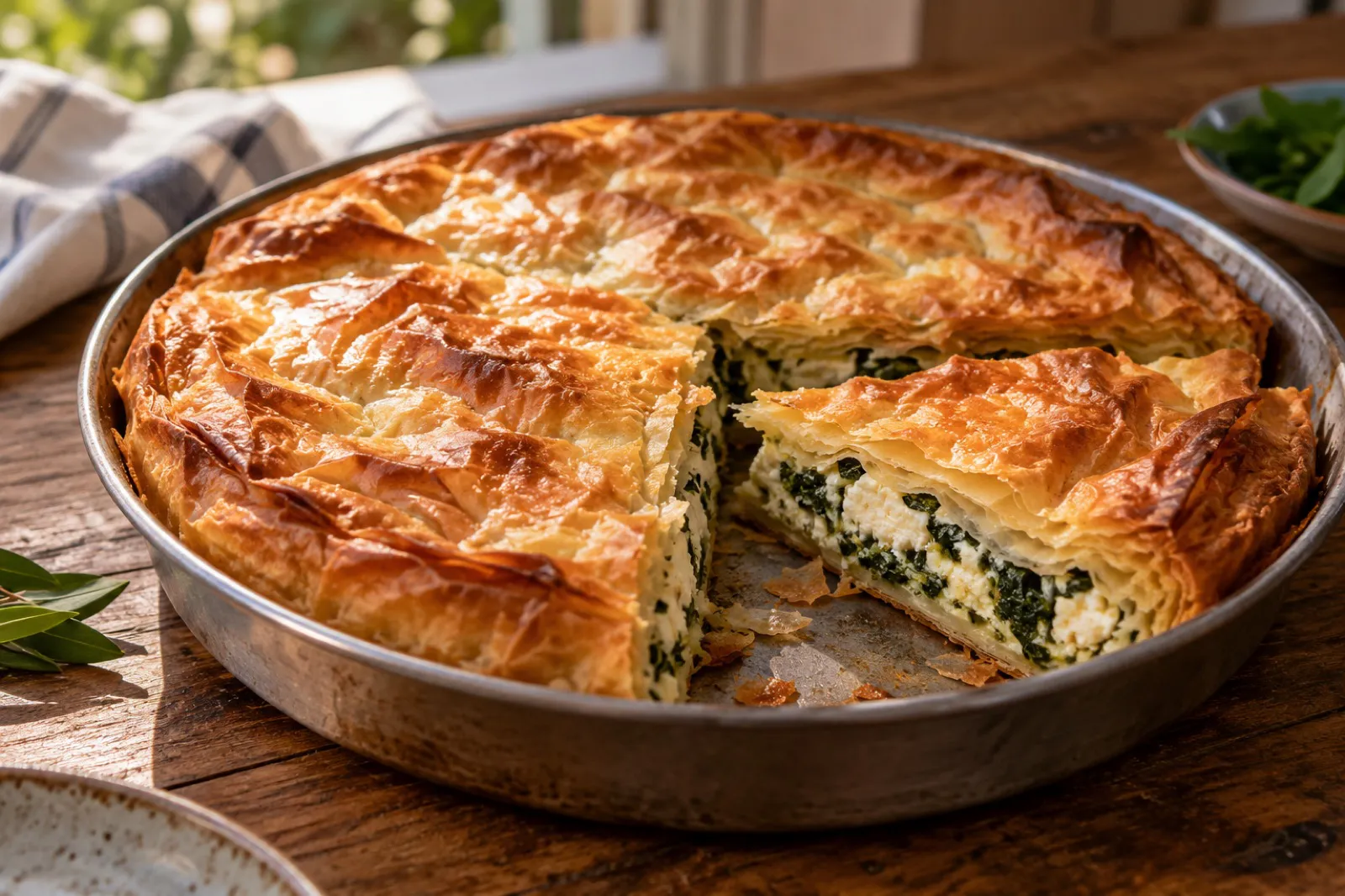
Byrek is one of the best-known dishes in Albania. It is a savoury pie made of thin layers of pastry wrapped around a filling, baked in a large tray until crisp and golden, then cut into pieces. You find it in bakeries, at breakfast, at family meals, and wrapped in paper to eat on the go. Versions of it are made across the Balkans and beyond, and recipes vary from region to region and kitchen to kitchen.
Common fillings include spinach with cheese, plain cheese, minced meat with onion, and leeks. The traditional way is to make the pastry by hand, rolling sheets out very thin. That takes real practice.
This recipe is not that. It is a straightforward home version using shop-bought filo pastry, which gets you close to the crisp, layered result with very little effort. We are not presenting it as a family recipe or the one true way. It is simply a good byrek you can make on a weeknight, with olive oil brushed between the layers.
Spinach and cheese byrek
Makes one tray, about 8 pieces. You need a baking tin of roughly 23 x 30 cm, or a 28 cm round tin.
- 1 pack filo pastry (about 270 g, 10 to 12 sheets), thawed if frozen
- 400 g fresh spinach, or 250 g frozen spinach, thawed
- 4 spring onions, finely sliced
- 200 g feta, crumbled
- 250 g ricotta or cottage cheese
- 2 eggs
- About 100 ml extra virgin olive oil, for brushing
- Black pepper
In Albania, a fresh curd cheese called gjizë is often used in fillings like this. Ricotta or well-drained cottage cheese is a good stand-in outside the country.
Method
- Heat the oven to 190°C, or 170°C for a fan oven.
- If using fresh spinach, wilt it in a large pan with a splash of water, then tip it into a sieve. If using frozen, simply thaw it. Either way, squeeze out as much water as you can with your hands, then chop it roughly. This step matters: wet spinach makes soggy pastry.
- In a bowl, mix the spinach, spring onions, feta, ricotta and eggs. Season with black pepper. You probably will not need salt, as feta is salty.
- Brush the tin generously with olive oil.
- Unroll the filo and keep it covered with a clean, damp tea towel while you work, so it does not dry out and crack.
- Lay one sheet in the tin, letting any excess hang over the sides or folding it to fit. Brush it with oil. Repeat with half the sheets, brushing each one.
- Spread the filling evenly over the pastry.
- Cover with the remaining sheets, brushing each one with oil as before. Fold or tuck the overhanging edges in over the top.
- Brush the top well with oil. With a sharp knife, score the top layers into 8 pieces, cutting through the pastry but not all the way to the base. This makes it much easier to cut neatly after baking.
- Bake for 35 to 45 minutes, until the top is deep golden and crisp and the filling is set.
- Rest the byrek in the tin for 10 minutes before cutting along the scored lines.
Tips for a better byrek
- Do not be shy with the oil. Each sheet needs a light but complete coat. The oil is what separates the layers and turns them crisp.
- Scrunch, do not stretch. If a sheet tears, do not worry. Torn or scrunched sheets bake up just as well and give the top a lovely rough texture.
Why olive oil
Recipes for byrek vary on the fat between the layers. Some use butter, some use oil, some use a mix. Olive oil makes the pastry very crisp and adds a gentle savoury, fruity note that suits spinach and cheese well. It also means there is nothing to melt first: just a bowl of oil and a pastry brush.
Other fillings to try
- Cheese only: 300 g feta and 250 g ricotta with 2 eggs.
- Leek: 3 leeks, sliced and softened in olive oil for 10 minutes, mixed with 150 g feta and 1 egg.
- Meat and onion: 400 g minced beef or lamb browned with 1 chopped onion, seasoned with salt, pepper and a little paprika, cooled before using.
Serving
Byrek is good warm or at room temperature. In Albania it is often eaten with plain yogurt or with dhallë, a salted yogurt drink. A tomato and cucumber salad dressed with olive oil makes it a full meal.
Leftovers keep in the fridge for a couple of days. Reheat pieces in a hot oven for 10 minutes to bring back the crunch.
Dukat, where our extra virgin olive oil comes from, is a village in Vlorë county, Albania, between the mountains and the sea. A tray of byrek takes about a fifth of a half-litre bottle for the brushing. The Bottle covers it, with plenty left for the salad.