
An olive oil tasting is one of the easiest food evenings you can host. It costs a fraction of a wine tasting, nobody needs to drive home carefully afterwards, and it ends with everyone eating bread. Once you have tasted oils side by side, you will read the next label in the shop quite differently.
Here is how to put one together.
Pick the oils
Three or four oils is the sweet spot. Fewer and there is not much to compare. More and palates get tired.
Choose oils that differ in a way people can notice. A few ideas:
- Everyday vs fresh: the oil most of your guests probably cook with, next to one with a recent harvest date.
- Mild vs robust: a gentle, ripe-tasting oil next to a green, peppery one.
- Different places: oils from different countries or regions.
- Old vs new: the same kind of oil, one opened months ago, one opened today. This one is a real eye-opener.
Check each bottle for a harvest date and note it down. It makes the conversation more interesting later.
What you need on the table
- Small glasses or cups: one per oil, per person. Shot glasses, espresso cups or small tumblers all work.
- Labels: numbers on the glasses, not names. You will reveal the oils at the end.
- Green apple slices and water: for clearing the palate between oils.
- Plain bread: for later. Mild, not sourdough with a strong tang, and nothing seasoned.
- Paper and pens: a simple sheet with columns for fruity, bitter, peppery, notes, and a score.
Set it up blind
Pour the oils in the kitchen, before guests sit down, about a tablespoon per glass. Number the glasses and keep the key to yourself. Tasting blind stops people judging by label, price or the look of the bottle.
If you can, use coloured or opaque cups. Professional tasters use tinted glasses so colour does not sway them, since colour tells you little about quality.
Line the oils up from what you expect to be mildest to strongest, so the robust ones do not overwhelm the delicate ones.
Run the tasting
Walk everyone through the method together for the first oil, then let people go at their own pace:
- Warm: cup the glass in one hand, cover it with the other, hold for a minute.
- Smell: uncover, sniff a few times, write down the first things that come to mind.
- Sip and slurp: take a small sip and draw air in through your teeth. It is loud. Everyone will laugh. That is fine.
- Swallow and wait: notice any catch at the back of the throat.
- Score and reset: note it down, eat a slice of apple, sip some water, move on.
Ask people not to share their notes until everyone has tasted that oil. First impressions are the interesting part.
Talk about it
Once everyone has tried all the oils, go round the table one oil at a time. Some questions that get people going:
- What did it smell of? Grass, apple, tomato, nuts, nothing?
- Was it bitter? Pleasantly, or too much?
- Did it catch your throat? Did anyone cough?
- Did anything smell off, like crayons, old nuts or damp?
- Which would you put on a salad? Which would you fry with?
Then reveal which oil was which, along with the harvest dates. This is usually the moment people get surprised.
Turn it into dinner
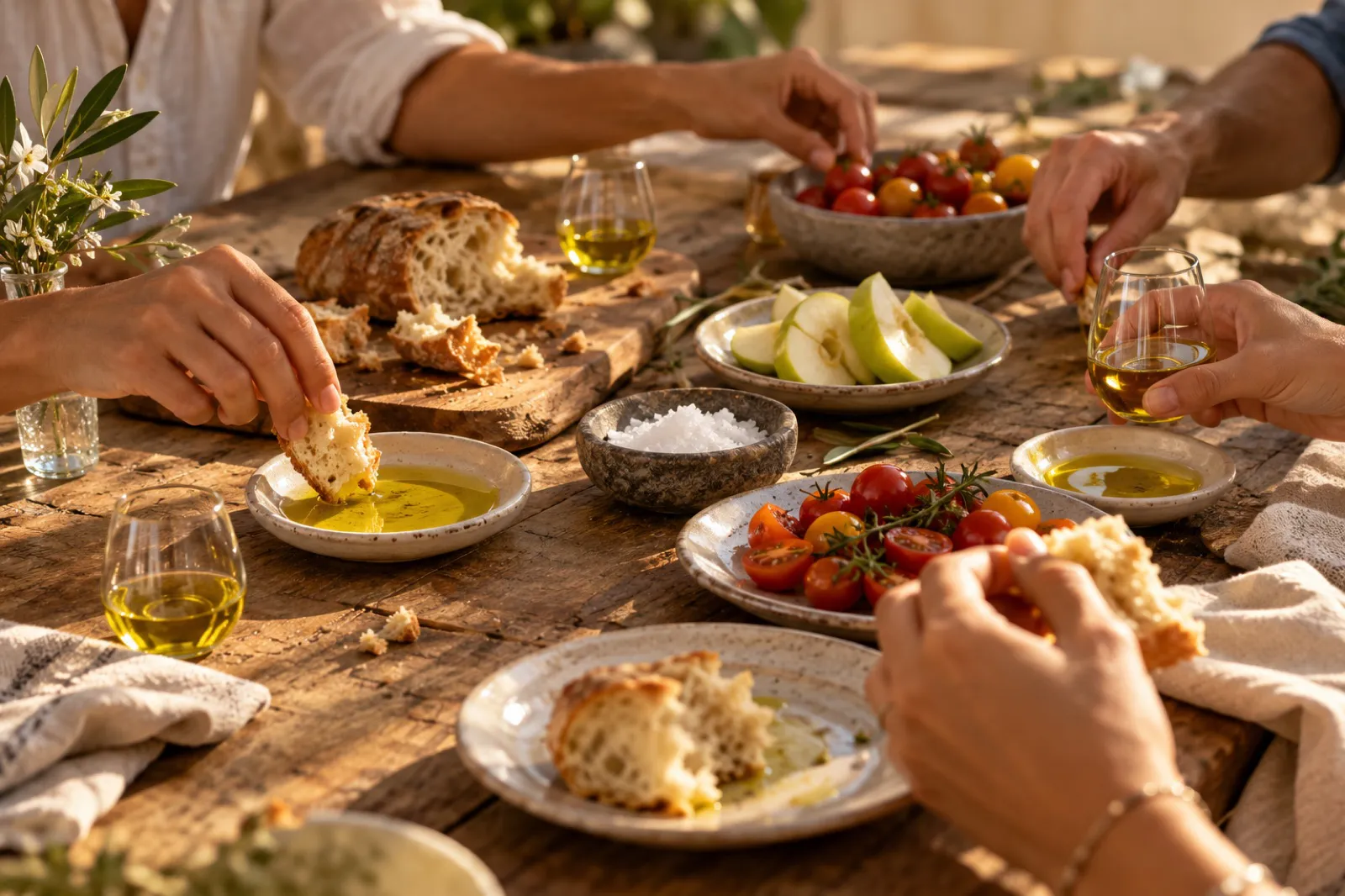
Do not stop at the glasses. Put the oils in small bowls and bring out simple food that shows them off:
- Warm bread and flaky salt.
- Sliced ripe tomatoes.
- Boiled new potatoes or white beans.
- Bitter leaves like rocket or radicchio.
- A soft fresh cheese.
- Vanilla ice cream, for the brave.
Let people try each oil on different foods. An oil that felt too fierce on its own often comes into its own on beans or bitter leaves.
A few hosting tips
- Avoid strong scents in the room: no candles, no cooking smells, go easy on perfume.
- Keep the oils at room temperature, out of direct light, until you pour.
- Pour small amounts. You will use far less than you think.
- Send guests home with the leftover oil. Opened bottles are better used than kept.
Bring a bottle with a story
Every tasting is better with one oil whose origin you can talk about. Dukat comes from Dukat, a village in Vlorë county, Albania, between the mountains and the sea, and each bottle carries a harvest date and batch code for your reveal. If you want a couple of bottles for the evening, The Pair is a good place to start.