

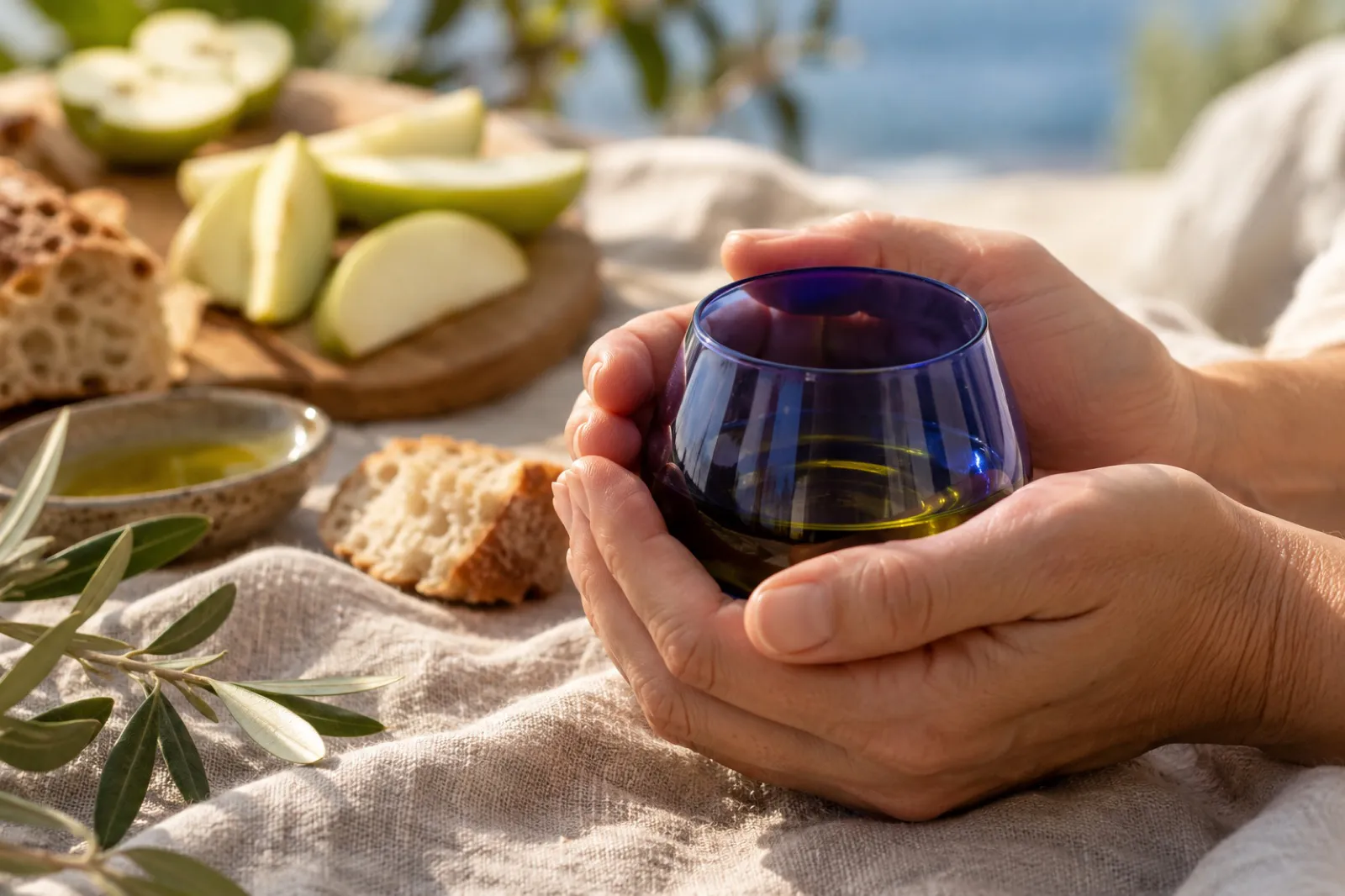
Most of us only ever taste olive oil on something: bread, salad, a bowl of beans. That is the best way to enjoy it, but it hides a lot. If you want to know what an oil actually tastes like, try it on its own, the way professional tasting panels do.
It takes five minutes and a small glass. The first time feels a bit odd. By the third oil you will start noticing things you have never picked up before.
What you need
- A small glass for each oil. A shot glass, a small tumbler or a wine glass all work.
- A spoonful or so of each oil. You do not need much.
- Something to clean your palate. Slices of green apple and plain water at room temperature. Tasters use apple because it clears oil from the mouth well.
- A quiet, smell-free spot. Not right after cooking, and skip the perfume.
A word on colour
Professional panels taste from tinted glasses, usually dark blue, so they cannot see the oil. That is because colour tells you very little about quality. A deep green oil is not automatically better than a golden one. Colour depends on the olives and when they were picked, and it can fool you into expecting a flavour that is not there.
You do not need special glasses. Just do not let the colour make up your mind before your nose and mouth have had a go.
The method, step by step
- Pour. About a tablespoon into the glass.
- Warm it. Cup the glass in one hand and cover the top with the other. Hold it for a minute or two. Warmth releases the aromas, and covering the glass keeps them in.
- Swirl. Still covered, give it a gentle swirl so the oil coats the inside of the glass.
- Smell. Uncover, bring the glass to your nose and take a few short, deep sniffs. Then cover it again. Notice what comes to mind first. Cut grass? Green apple? Tomato leaf? Ripe banana? Nothing much?
- Sip. Take a small sip, enough to coat your tongue.
- Slurp. With the oil in your mouth and your teeth slightly apart, suck in air sharply through the gaps, a few times. It is noisy. That is the point. Pulling air through the oil spreads it around your mouth and pushes aroma up into your nose.
- Swallow. Notice what happens at the back of your throat a second or two later.
- Reset. A bite of apple, a sip of water, a short pause, then on to the next oil.
What to pay attention to
Professional tasters judge olive oil on three positive qualities. Keep them in mind as you taste:
- Fruitiness. The smell and taste of fresh olives. It can lean green (grass, leaves, artichoke, unripe fruit) or ripe (softer, rounder, sometimes nutty or buttery).
- Bitterness. Felt on the tongue. In a fresh oil this is a good sign, not a flaw. Think of the pleasant bitterness of rocket, radicchio or dark chocolate.
- Pungency. The peppery tickle in the throat after you swallow. Some oils barely have it. Some make you cough. Both can be good.
Then ask yourself one more thing: is anything off? Smells of crayons, old nuts, vinegar, damp cellar or sweaty socks point to an oil that has gone stale or was made from damaged fruit.
Make it a comparison
Tasting one oil on its own is interesting. Tasting two or three side by side is where it clicks. Differences that are invisible on bread jump out when the glasses are next to each other.
A good starter set: the oil you normally cook with, an older bottle that has been open a while, and a fresh bottle with a recent harvest date. Taste from mildest to strongest so the big flavours do not drown the gentle ones.
Write it down
Jot a few words for each oil: what you smelled, how bitter, how peppery, and whether you liked it. There are no wrong answers. Over time you will build your own vocabulary, and you will start to know what you want from a bottle before you buy it.
Try it with a bottle you know the story of
Tasting is more interesting when you know where the oil came from and when. Every bottle of Dukat extra virgin olive oil comes from Dukat, a village in Vlorë county, Albania, between the mountains and the sea, and carries a harvest date and batch code. If you want a bottle to start practising with, you can find The Bottle in our shop.