

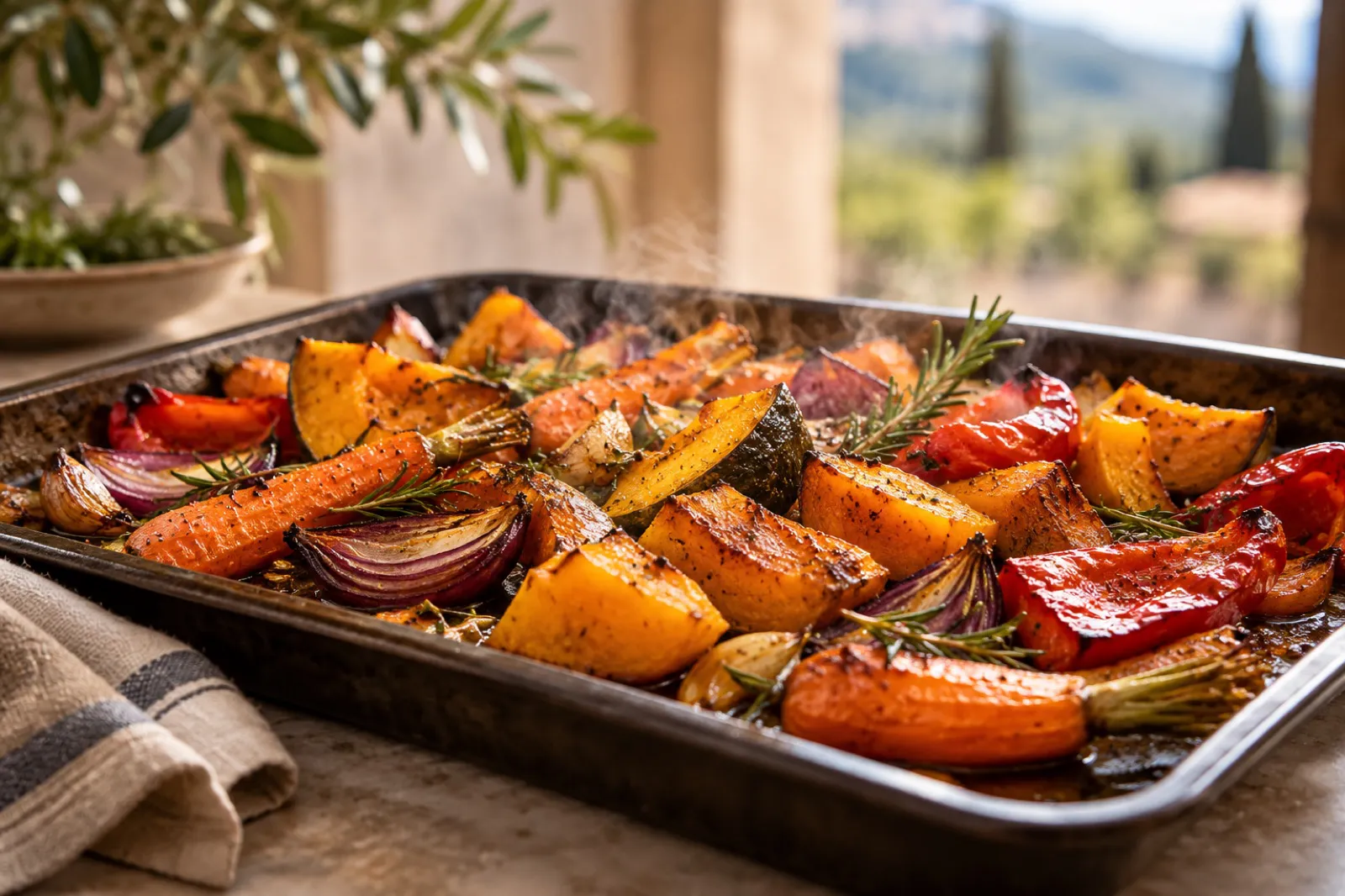
Roast vegetables should be browned at the edges, tender in the middle, and slightly sweet. Too often they come out pale, limp and a bit greasy. The fix is not a better recipe. It is a better method, and it works for almost any vegetable you put in the oven.
The method
- Heat the oven properly. Set it to 220°C, or 200°C for a fan oven, and give it a full 15 minutes to get there. Put your roasting tray in while it heats.
- Cut evenly. Pieces of the same size cook at the same speed. For most root vegetables, aim for chunks about 3 cm across.
- Dry the vegetables. Washed vegetables carry water into the oven, and water makes steam. Pat them dry with a clean tea towel.
- Oil them in a bowl, not on the tray. Put the vegetables in a large bowl, add about 2 tbsp extra virgin olive oil for every 500 g, add salt, and toss with your hands until every surface is lightly coated.
- Give them room. Tip them onto the hot tray in a single layer with space between the pieces. Use two trays if you need to.
- Leave them alone. Roast without touching for the first two thirds of the cooking time, then turn them once.
- Finish them. When they come out, add a little more oil, a squeeze of lemon and some fresh herbs, and check the salt.
Why it works
Heat browns, low heat stews. Browning happens when the surface of a vegetable dries out and gets hot. In a cool oven, moisture leaves the vegetables slowly and they cook in their own steam. A properly hot oven dries the surface fast so it can colour.
Space lets steam escape. This is the most common mistake. Crowd a tray and the water coming out of each piece has nowhere to go, so it gathers around its neighbours. You end up steaming the vegetables instead of roasting them. If the pieces are touching, use a second tray.
Tossing coats, drizzling pools. Oil drizzled over a tray lands on some pieces and misses others, and the rest gathers in the corners. Tossing in a bowl puts a thin, even layer on every surface, which is what helps them brown evenly. You also end up using less oil.
A hot tray gives a head start. Vegetables that land on a hot tray start sizzling straight away. That first contact is where the best browned edges come from.
Rough timings at 220°C (200°C fan)
Every oven is different, so treat these as a guide and check with the tip of a knife.
- Potatoes, 3 cm chunks: 35 to 45 minutes
- Carrots and parsnips, 3 cm pieces: 25 to 35 minutes
- Butternut squash, 3 cm cubes: 30 to 40 minutes
- Beetroot, wedges: 40 to 50 minutes
- Cauliflower, florets: 25 to 30 minutes
- Red onions, wedges: 25 to 30 minutes
- Peppers, thick strips: 20 to 30 minutes
- Broccoli, florets: 15 to 20 minutes
- Courgettes, thick half moons: 15 to 20 minutes
- Cherry tomatoes, whole: 15 to 20 minutes
If you want to roast a mix on one tray, either cut the slower vegetables smaller or start them first and add the quicker ones partway through.
Seasoning ideas
Salt and olive oil are enough. If you want more, add any one of these before roasting:
- Whole garlic cloves, left in their skins, squeezed out at the end
- A few sprigs of rosemary or thyme
- 1 tsp cumin seeds or fennel seeds
- Half a tsp chilli flakes
- 1 tsp dried oregano
Add these after roasting, while the vegetables are hot:
- Lemon juice or zest
- Chopped parsley, mint or dill
- Crumbled feta or a spoonful of plain yogurt
- A spoonful of lemon and olive oil dressing
Cook with it, then finish with it
Roast vegetables are a good example of using olive oil twice. Extra virgin olive oil is widely used for roasting, and the oil on the tray does the practical work: it carries heat and helps the surface brown. In the oven, though, the oil’s fresher, greener flavours soften.
So when the tray comes out, pour over a little more. A spoonful of raw oil on hot vegetables brings that fresh flavour back, makes them glossy, and turns a side dish into something people go back for.
Leftovers
Roast vegetables keep in the fridge for a couple of days. Do not microwave them if you can help it: reheat them on a tray in a hot oven for 10 minutes, or eat them at room temperature in a salad with leaves, a handful of cooked grains and a good pour of oil.
A tray of vegetables like this uses a steady amount of oil, one in the bowl and one on the plate. If you roast most weeks, The Case keeps the cupboard stocked with half-litre bottles of our extra virgin olive oil from Dukat, Albania. See all the ways to buy.