

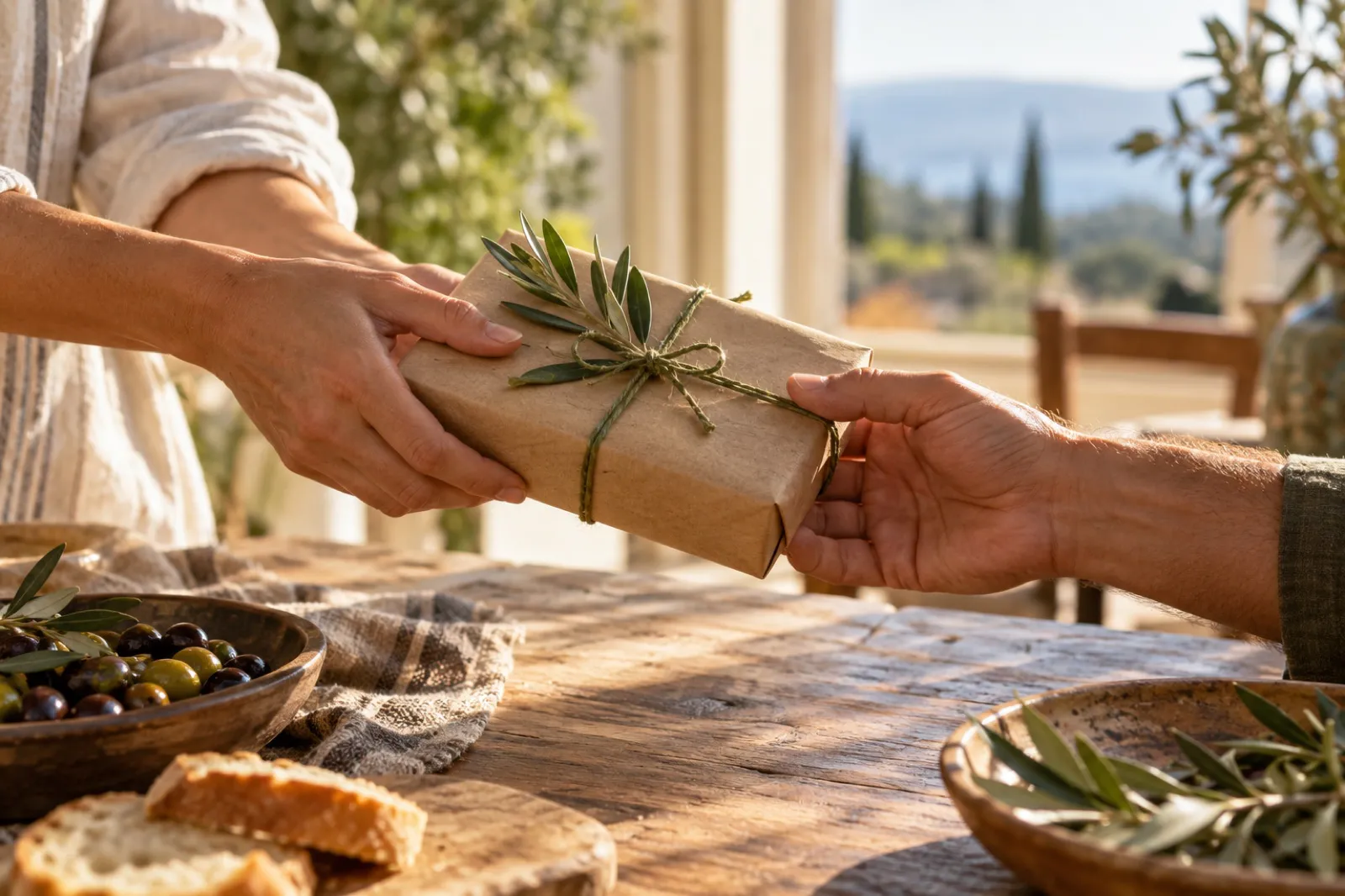
Somebody fed your cat for a week. A colleague covered for you. A friend spent their Saturday carrying your sofa up three flights of stairs. You want to say thank you with more than a text, so you buy something. And a month later it is in a drawer with the scented candles and the novelty mugs.
It is not that people are ungrateful. It is that most thank you gifts are chosen for how they look in the shop, not for how they fit into someone’s week. Here is how to choose one that actually gets used.
Why thank you gifts get forgotten
- They are decorative. Ornaments, frames and trinkets need space and taste to match. Most homes are already full.
- They are a guess at someone’s style. Mugs, scarves and candles are personal. If you guess wrong, they feel obliged to keep it anyway.
- They never run out. An object that does not get used up stays around, quietly unused, for years.
A simple test before you buy
Ask three questions about any thank you gift.
- Will it be used up? Food, drink, flowers and good soap all disappear in a satisfying way. Nobody has to find a shelf for them.
- Does it fit the life they already have? A gift that slots into something they do every day gets used every day. Cooking, coffee and bread are things most people do often.
- Is it easy to accept? A thank you gift should match the favour. Something too expensive makes the other person feel they owe you. Something simple and good says thank you without making it a thing.
A bottle of good olive oil passes all three. It gets used a little at a time, it fits into almost any kitchen, and it is generous without being awkward.
Ideas for the people who are hardest to thank
The neighbour who helped. Keep it small and immediate. A bottle of oil with a short note on the doorstep, or a loaf of bread and a bottle together if you are knocking on the door.
A teacher or carer. Many schools, hospitals and care homes have rules about what staff can accept, often with a value limit. Check first. A modest food gift with a card is usually welcome, and a card that names something specific they did means more than anything you can buy.
A colleague who covered for you. Something they can take home, not leave on their desk. Olive oil works well here because it does not need to match their taste in anything except food.
The friend who gave up a weekend. This is a bigger favour, so go a step up. Two bottles, one to keep and one to share, or a bottle plus a meal you cook for them. The meal is often the part they remember.
Your hosts after a stay. If you stayed a few nights, send something after you leave. It arrives once the guest room is tidied and the house is quiet again, which is a nice moment to be thanked.
The note matters more than the gift
A thank you gift without a note is just a present. With a note, it is a thank you. Keep it short and specific.
- Name the thing they did: “Thank you for driving me to the airport at five in the morning.”
- Say what difference it made: “I would have missed the flight without you.”
- Link it to the gift if you can: “This is for the next time you make eggs on a slow Sunday.”
Handwritten beats printed. Three lines beat a paragraph.
Timing
Say thank you soon. A gift that arrives within a week feels like gratitude. One that arrives two months later feels like an obligation you finally got around to. If you cannot get the gift quickly, send the note now and the gift later.
Why olive oil works
A good bottle of extra virgin olive oil is one of the few gifts that feels a little special and is still completely practical. It goes on the counter, gets used on salads and bread and in the pan, and runs out at a natural pace. Every time they reach for it, they think of you for a second. That is all a thank you gift needs to do.
Ours comes from Dukat, a village in Vlorë county, Albania, between the mountains and the sea. It gives you something to write on the card, too.
If you need one to hand over this week, The Bottle is the easy choice. If the favour was a big one, The Pair gives them one to open and one to keep.