

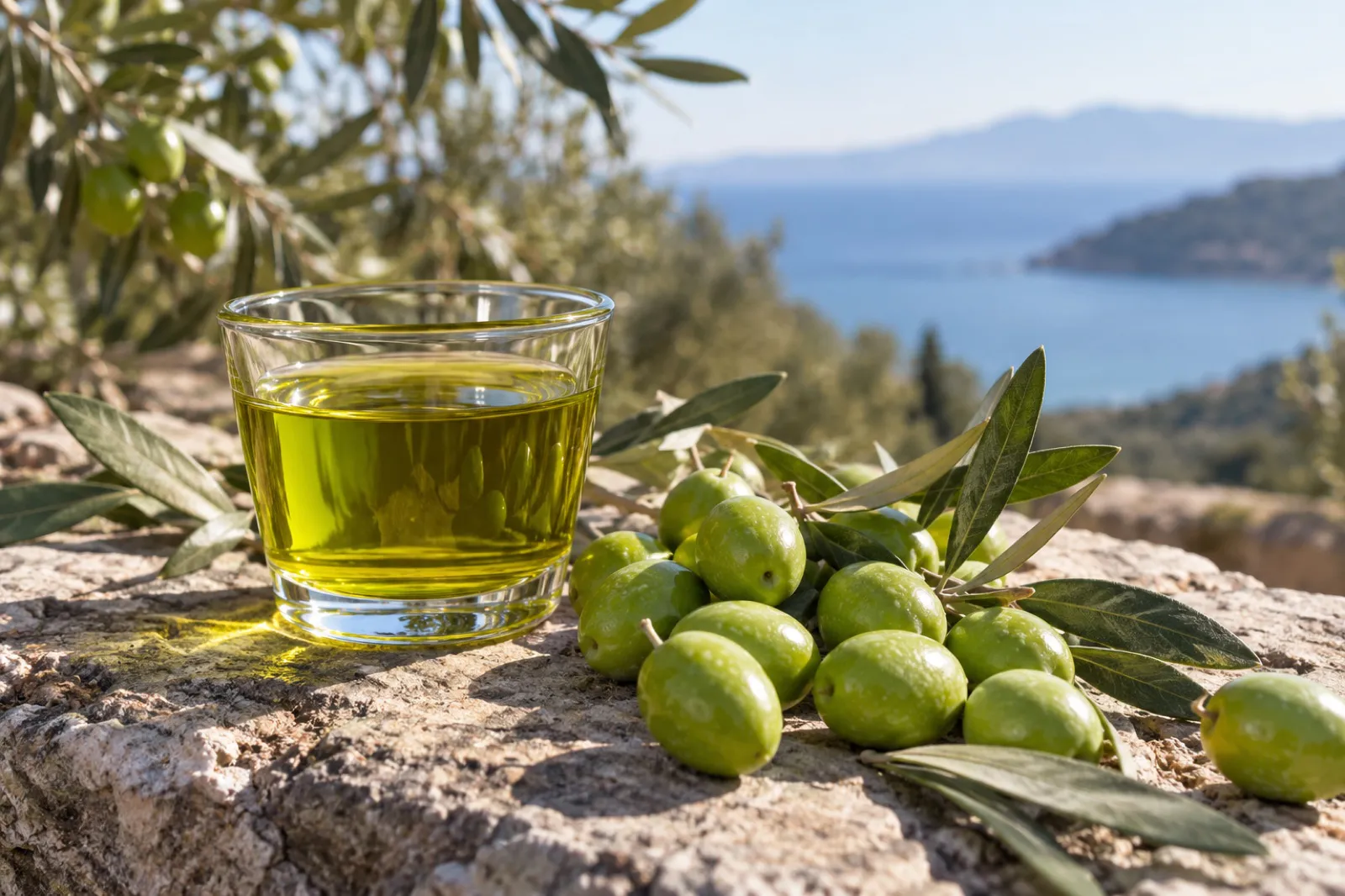
“Extra virgin” is the most familiar phrase in olive oil and one of the least understood. It sounds like marketing. It is actually a legal grade, with tests behind it. It also means less than many people think.
It is a grade, not a description
Extra virgin is the top grade in a system set out by the International Olive Council, with matching standards written into UK and EU law. To carry the name, an oil has to meet three conditions.
- It is made by mechanical or physical means only. The olives are washed and crushed, and the oil is separated, with no chemical solvents and no refining. The conditions, including temperature, must not alter the oil.
- It passes chemical tests. The best known is free acidity, which must be at or below 0.8%. There are several others, covering things like oxidation and signs of poor handling or mixing with other oils.
- It passes a tasting panel. Trained tasters assess the oil under set conditions. To be extra virgin, the panel’s median score for fruitiness must be above zero, and its median score for defects must be exactly zero. Not low. Zero.
That third test surprises people. A machine cannot decide on its own whether an oil is extra virgin. Human tasters are part of the legal definition.
What “free acidity” means
Free acidity measures how much of the fat in the oil has broken down into free fatty acids. Damaged fruit, long delays between picking and milling, and careless handling all push it up. It is not a taste. You cannot taste free fatty acids at these levels, so a low figure does not mean a smoother or milder oil. Think of acidity as one sign of how the olives were treated, not as a flavour score.
The grades below
Virgin olive oil is also made by mechanical means only, but it is allowed higher acidity, up to 2%, and slight sensory defects. It is much less common in UK shops than extra virgin.
Lampante oil fails those standards. The name comes from its old use as lamp oil. It cannot be sold to shoppers as it is. It goes to a refinery.
Refined oils, and the blends made from them, sit below that. We explain them in our guide to olive oil grades.
What extra virgin does not tell you
The grade is a floor, not a ceiling. Inside it, there is a huge range.
- It does not tell you how fresh the oil is. A test result describes the oil on the day it was tested. Olive oil keeps changing with time, light and heat. An oil that passed as extra virgin can drift below the standard by the time you open it, especially after months on a bright shelf.
- It does not tell you how it tastes. Extra virgin oils range from soft and buttery to green, bitter and peppery. Both can be excellent. The grade only says the oil is clean and has some fruit.
- It does not tell you where it came from. That is a separate line on the label.
- It does not mean “first cold pressed”. That is a separate, optional label term with its own rules: oil extracted below 27°C in a traditional press. Most modern mills use a centrifuge, not a press, so the accurate term for their oil is “cold extraction”, and only if it stayed below 27°C.
Taste the difference yourself
You do not need a panel to learn a lot. Pour a spoonful of any oil labelled extra virgin into a small glass, warm it in your hand, smell it, then sip.
- Good signs: clean, green or fruity aromas, like grass, green apple, tomato leaf or almond. Bitterness on the tongue and a peppery catch in the throat are normal in many fresh oils, and tasters count them as positive qualities.
- Faults: a smell of crayons, putty, a damp cellar or vinegar.
If you clearly find a fault, the oil in your glass is unlikely to pass as extra virgin today, whatever the label says.
So what should you look for?
Use “extra virgin” as the first filter, not the last. Then look for what the grade cannot tell you: a harvest date, a clear origin, and packaging that keeps light out. Those are what separate a good extra virgin from one that only just qualified, or one that qualified a long time ago.
A label that gives you all three is a label you can check. A label that leans on the grade alone, plus a few warm adjectives, is asking you to take the rest on trust.
Dukat oil is extra virgin, from Dukat, a village in Vlorë county, Albania. It comes in dark glass, and every bottle carries a harvest date and a batch code. If you want to taste what that looks like in practice, start with The Bottle.