

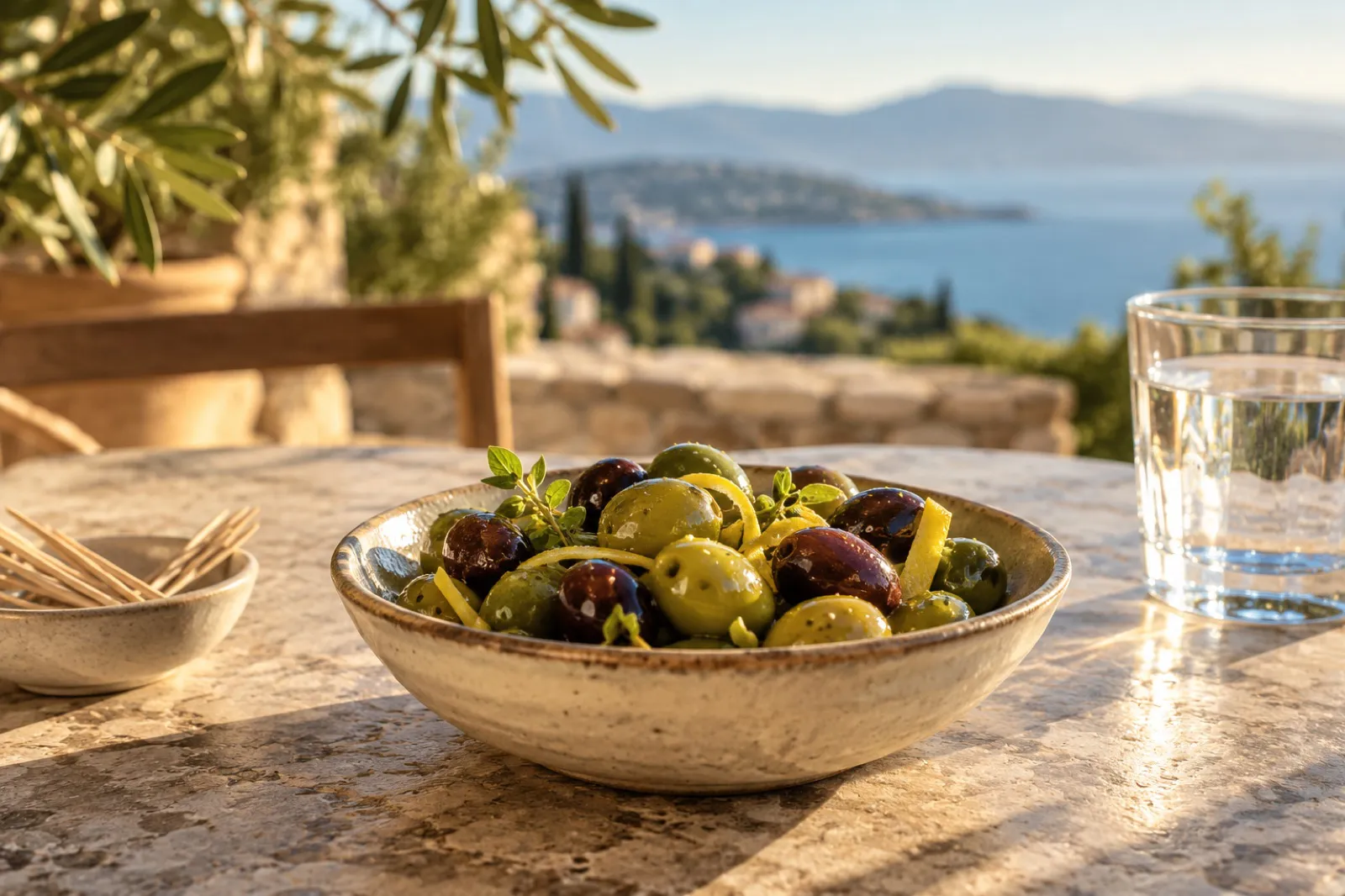
If you have ever picked an olive straight off a tree and bitten into it, you will only have done it once. Fresh olives are fiercely bitter. You cannot eat them as they come.
Every olive you buy has been cured. That process is what turns a hard, bitter fruit into one of the best snacks there is.
Why raw olives are bitter
Olives contain a bitter compound called oleuropein. It is part of the same family of compounds that gives olive oil its bitterness and pepper. In a raw olive there is so much of it that the fruit is inedible.
Curing draws that bitterness out, slowly, and replaces it with salt and flavour.
The main ways olives are cured
Different regions cure olives in different ways. The main methods are:
- Brine curing. Olives sit in salted water for weeks or months. The bitterness leaches out into the brine, and the olives slowly ferment. This gives a firm olive with a sharp, salty, slightly sour taste.
- Water curing. Olives are soaked in fresh water, changed often, before going into brine. Gentle and slow.
- Dry salt curing. Ripe black olives are packed in salt. They shrivel and wrinkle, and the flavour becomes intense, almost like a prune with salt.
- Lye curing. Olives are treated with a food-grade alkaline solution, then rinsed well and put into brine. This is much faster and gives a milder olive.
Green and black olives are often the same fruit picked at different stages. Green olives are picked before they ripen. Black olives are left on the tree longer. Some black olives in tins are green olives darkened during processing, which is why they can taste quite plain.
Olives are salty, and that is the point
Salt is how olives are preserved, so cured olives are salty food. Think of them the way you think of anchovies, capers, or a good cheese: something to enjoy a few at a time, with other things around them.
If a batch tastes too salty for you:
- Rinse them under cold water.
- Soak them in fresh water for an hour or two, then taste.
- Drain, dry, and dress them in olive oil with herbs.
That last step does more than soften the salt. It makes them taste like you made them yourself.
How to serve olives
The simplest way is the best. Take them out of the fridge half an hour before eating. Cold olives taste muted. At room temperature the flavour opens up.
Then try one of these:
- Citrus and herb. Toss olives with olive oil, strips of orange or lemon zest, crushed garlic, and fresh oregano or thyme. Leave for an hour.
- Warm olives. Heat olives gently in a pan with olive oil, a bay leaf, chilli flakes, and fennel seeds. Serve warm with bread for the oil.
- With cheese. A plate of olives, feta or a salty white cheese, cucumber, and tomatoes is lunch in much of the Mediterranean.
- In cooking. Scatter olives over baked fish, roasted chicken, or a tray of peppers in the last part of cooking.
Always put out a small dish for the stones. It is a small thing that makes people relax and eat.
Olives as part of a slower snack
There is something about olives that slows you down. You cannot eat them in handfuls. There are stones to deal with, and the salt makes you want bread, a slice of cheese, a glass of something. Olives turn a snack into a small occasion.
That is the Mediterranean way with them: a bowl in the middle of the table while dinner finishes cooking, while people talk.
Storing olives
Keep opened olives in their brine, in the fridge, fully covered. If the brine runs low, top it up with salted water. Olives you have dressed in oil should be kept in the fridge and eaten within a few days.
If a jar smells off, looks cloudy in a way it did not before, or grows anything on the surface, throw it away.
Olives and oil, together
Olives and olive oil come from the same fruit, and they belong on the same table. A bowl of olives, a dish of oil for dipping, and some good bread make one of the easiest things you can put in front of people.
Our extra virgin olive oil comes from Dukat, in Vlorë, Albania. Pour some over your next bowl of olives, and if you need a bottle, you can find our oil here.